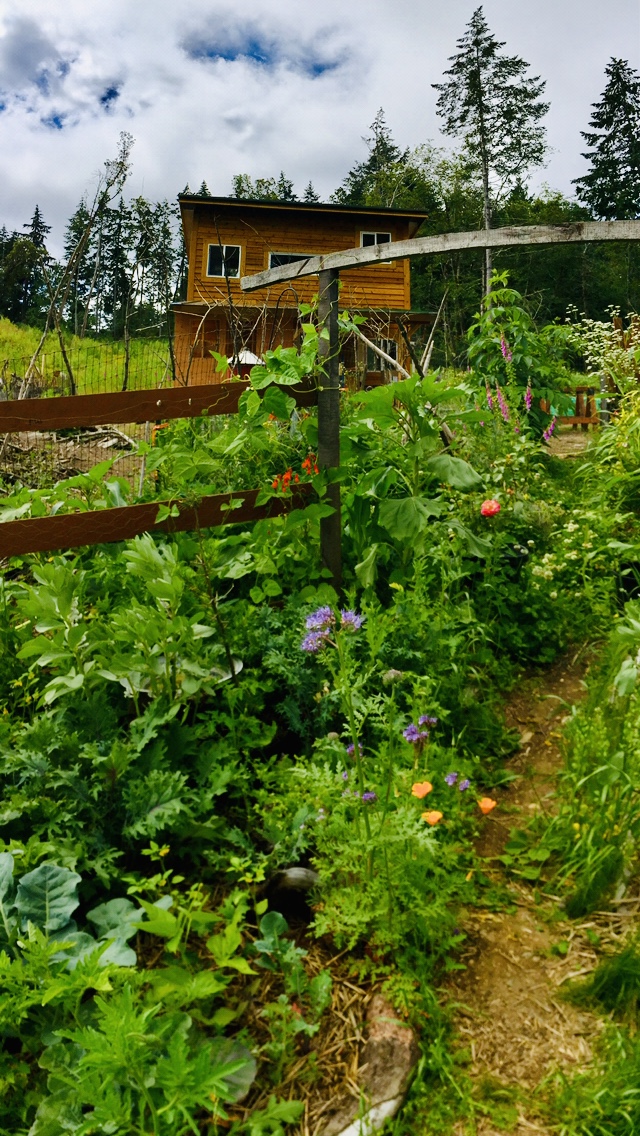

I plan to regenerate degraded ecosystems with permaculture design. I wish to see native plant life return to the deforested land. To see diversity return in areas that have been logged over many decades and have lost their diversity through those processes. To see perennial food systems that create an abundance of food for human and animal consumption. To have relationships between me and other humans in my own life flourish. I will improve my own problem-solving abilities. I wish for others to learn from my own behaviors which can then allow them to gain a permaculture problem solving perspective.
Focus on relationships, not components: only when I put it all together does it become a working collaboration. I’m not me I’m a series of decisions and events. I’m thousands of partnerships in a relation to all things.
The acronym GOBRADIME summarize the steps used in order to create a Permaculture design. Here is my thoughts while reflection on each piece of GOBRADIME: Goal is the ultimate best case scenario in relationship to my current opinions and feelings as to what is best for the whole. Observation is my best ability to absorb the all the forms of information all around me. Boundaries are my perceived limitations based on my current information, viewpoints and feelings. Resources are my perception and belief of the things in my environment that are of benefit to me or the whole. Analysis is my contemplations, descriptions, opinions and feelings of all information gathered. Design is a mindfully collaborated orchestration of things in the environment with the intention of positively enhancing the relationships of all things inspired by my current feelings and viewpoints. Implementation is the addition, subtraction and arrangement of all things in an environment in relationship to the design. Management is the required participation in the design after the implementation. Evaluation, Evolution and Enjoyment is a reflection, feelings or opinions on the results stemming from the design.
 Earthspeak